
Rollers for handling heavy loads
Efficiency and precision: TEGEA rollers for every production
Efficiency, quality and production continuity in automation systems, conveyor lines and finishing processes
Heavy-duty rollers are a key solution for optimizing internal transport processes in industrial, logistics, and manufacturing environments. Used in numerous sectors, these components facilitate the movement of bulky and heavy materials, improving operational continuity and contributing to more efficient management of handling lines.
TEGEA offers systems designed to meet different operational needs, with solutions engineered to ensure reliability, wear resistance, and long-term use. Industrial rollers can be integrated into conveyors, automated lines, storage systems, and industrial logistics systems, adapting to a variety of application contexts.
Design based on drawings and technical customization
The production of rollers for heavy-duty handling is primarily based on technical specifications. TEGEA develops customized solutions based on drawings provided by the customer or a shared analysis of application needs.
During the design phase, several aspects are considered:
- diameter and length of the roller
- internal soul type
- polyurethane or other elastomeric material coating
- dimensional tolerances and surface finish
This methodology allows for the creation of components that are consistent with the system's characteristics, ensuring precise integration into conveyor systems or automated lines.
High-performance materials for intensive use
Polyurethane is one of the most widely used materials for industrial rollers due to its high abrasion resistance and ability to withstand heavy loads without permanent deformation. Along with polyurethane, TEGEA uses elastomers selected based on the required operating conditions.
The main properties sought in heavy duty rollers include:
- high load capacity
- shock and vibration resistance
- good adhesion on contact surfaces
- stability over time even in the presence of continuous use
The choice of material and hardness is defined based on the application, ensuring a balance between structural strength and protection of the moving surfaces.
Industrial applications of rollers
Heavy-duty rollers are used in a variety of manufacturing environments, including internal transport systems, assembly lines, material processing plants, and industrial logistics facilities.
Correct roller design helps to:
- improve the smoothness of the scrolling
- reduce wear and tear on mechanical components
- distribute the load evenly
- ensure stability during handling
TEGEA's experience in processing technical materials allows it to develop rollers capable of operating in demanding conditions, maintaining consistent performance over time.
Quality control and operational reliability
Each roller undergoes dimensional checks and checks on the characteristics of the elastomeric coating. Attention to detail and precision manufacturing ensure compliance with design specifications.
Quality control is an integral part of the production process and allows us to offer reliable and consistently operational rollers for heavy-duty handling. Correct concentricity and coating adhesion are essential to ensuring smooth operation within the plant.
Collaboration-oriented technical support
TEGEA assists companies in defining the most suitable solution, providing technical support for choosing materials and configuring the roller. The goal is to create custom components that meet actual load and usage requirements.
The approach based on technical analysis and customization allows us to develop heavy-duty handling rollers that can be integrated into existing systems, contributing to the optimization of overall performance.
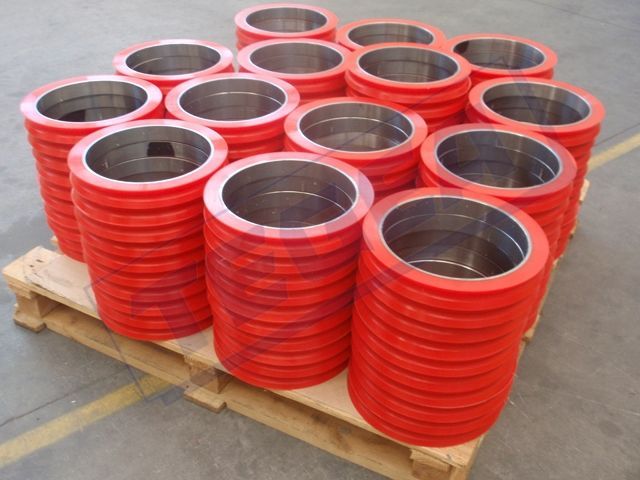
Curved and radiused rollers
Advanced solutions for centering and stability in transport systems
Crowned and radiused rollers are critical components in conveyor systems, and their importance cannot be overstated. These elements are specifically designed to keep the conveyor belt or materials centered, significantly contributing to efficient and safe operation in any work environment. The stability they provide is essential for preventing deviations and reducing the risk of malfunctions, thus ensuring minimal maintenance and optimal productivity.
TEGEA is proud to offer a full range of solutions, including:
- Supply of complete rollers: these rollers are designed and custom-made to meet the customer's specific needs, thus ensuring optimization of the handling process.
- Coating Service: We offer the appropriate application of specific materials on existing rollers, to improve their performance and operating life.
- De-rubbing and re-rubberizing: This service includes removing the old coating and applying a new one, restoring the functionality of worn rollers and extending their useful life.
With TEGEA, you can count on high-quality products and services, designed to optimize your handling systems.
Main features
- Coating materials: polyurethane, rubber, silicone and other polymers, chosen according to the specific needs of the application.
- Materials suitable for contact with food: production options include materials certified for the food industry.
- Crowned roller design: Featuring a flat center section and sloped sides, designed to customer specifications to ensure optimal centering of the conveyor belt.
- Radius Roller Design: Features an arched surface, commonly referred to as a “humpback,” perfect for applications requiring continuous, uniform contact with the conveyed material.
- Customizable sizes: Made to measure, with the possibility of producing both small and large sized rollers, based on the customer's needs.
Advantages over traditional cylindrical rollers
- Automatic centering: The curved or radiused shape of the belt plays a key role in keeping the conveyed material precisely centered. This innovative design significantly reduces belt deflection, thus contributing to less long-term wear. Keeping the material centered not only improves conveying efficiency but also the overall safety of the operation.
- Greater stability: Adopting this shape helps improve the stability of the belt, preventing unwanted swaying and deflections during transport. This increased stability is crucial for protecting the transported material and ensuring smooth operations, minimizing the risk of accidents and possible damage to the infrastructure.
- Reduced wear: Proper belt alignment not only increases operational efficiency, but also reduces wear on both the belt itself and the rollers involved. This reduced wear not only contributes to a longer operating life for the system as a whole, but also helps reduce long-term maintenance costs, allowing for a more sustainable and profitable investment.
Application sectors
- Belt Conveyors: Used to keep the belt centered during operation, essential in industries such as mining, food processing, and manufacturing.
- Coil Coating Processes: In sheet metal coating systems, curved and radiused rolls ensure that sheet metal coils remain centered, ensuring uniform and quality processing.
- Material handling: ideal for applications where correct positioning of material on the conveyor belt is essential, such as in logistics and distribution.
- Food industry: used in processing and packaging plants where contact with food is required.
Thanks to our experience, we help customers choose the curved or radiused roller best suited to their needs.
In the gallery below, you will find some examples of technical articles created.
You can also explore our full Gallery to view additional products and find inspiration for your application.
Name
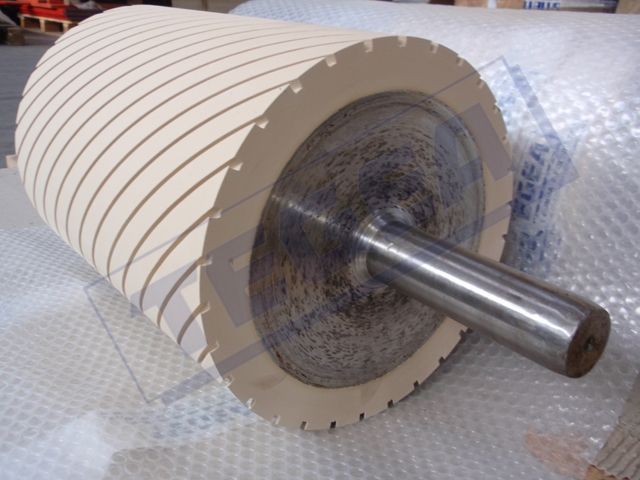
Striped rollers
Specialized solutions for efficient handling
Grooved rollers are essential components in conveyor and handling systems, specifically designed to optimize grip, facilitate liquid drainage, and significantly reduce material slippage during movement. Strategically placed grooves on the roller surface improve grip and traction, making these rollers ideal for a wide range of industrial applications, from manufacturing to logistics.
TEGEA offers a wide range of services and products to meet the diverse needs of its customers:
- Supply of complete rollers: These rollers are designed and manufactured to measure, taking into account the customer's specific needs and operating conditions, thus ensuring excellent and long-lasting performance.
- Coating service: We offer the application of specialized materials to existing rollers, with the aim of further improving their performance and extending their useful life.
- De-rubbing and re-rubberizing: This service includes removing the old coating from worn rollers and applying a new one, restoring them to optimal operating conditions and thus restoring the rollers to optimal working efficiency.
With our experience and commitment, TEGEA is able to provide effective and customized solutions that meet the most complex customer needs.
Types of lines available
We offer a wide variety of rifling to meet different operational needs:
- Circular grooves: grooves perpendicular to the roller axis, perfect for applications requiring high grip.
- Longitudinal grooves: grooves parallel to the roller axis, ideal for facilitating the drainage of liquids and preventing the accumulation of materials.
- Helical grooves: Spiral grooves around the roller combine the advantages of circular and longitudinal grooves, improving both grip and drainage.
- Diamond Ribbing: A diamond-shaped pattern on the roller surface provides uniform and stable grip.
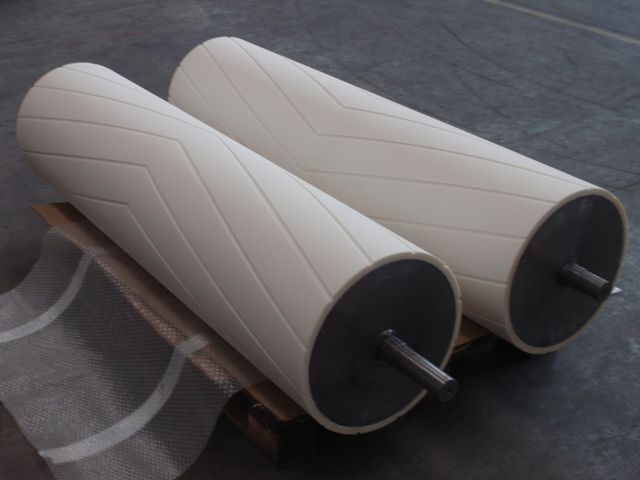
- Herringbone ridges: Inverted "V" shaped grooves, effective at diverting liquids away from the contact surface, optimizing traction.
Cladding materials
Depending on the specific application and the type of surface the roller will come into contact with, TEGEA can select the most suitable material to ensure optimal and long-lasting performance. Thanks to our experience, we have a wide range of materials, including polyurethane, rubber, silicone, and plastics, each offering different combinations of wear resistance, grip, elasticity, and compatibility with chemicals or food. Each material has been designed to meet specific needs, ensuring your roller performs at its best in every situation.
Furthermore, our expert technical team is always available to support and guide you in choosing the most suitable material for your specific needs, allowing you to optimize your production process and achieve excellent results. Whether you're looking for solutions for an industrial, commercial, or food application, we're here to help you find the perfect solution for your needs.
Advantages of ribbed rollers over smooth rollers
- Improved grip: Strategically designed grooves significantly increase friction between the roller and the conveyed material, thus minimizing the risk of slippage. This ensures more stable and safe material movement, essential in dynamic work environments.
- Efficient drainage: The grooves on the roller surfaces are designed to facilitate the rapid evacuation of liquids, preventing buildup that could compromise traction. This is essential for maintaining high transport performance and reducing the risk of accidents.
- Reduced slippage: Optimal traction not only ensures smoother and more controlled material transport, but also helps reduce roller wear and extend their lifespan. This is vital for increasing the overall efficiency of the conveyor system.
- Versatility: The ability to customize the type of grooves allows these rollers to easily adapt to a wide range of industrial applications, making them an ideal choice for a variety of handling needs. This level of adaptability ensures that every operation can benefit from the most effective solution for its specific needs.
Application sectors
Ribbed rollers are used in numerous sectors, including:
- Steel industry: used in coil slitters, where they help manage and control the sheet metal during the cutting process.
- Food industry: for transporting products on production lines where drainage of liquids or controlled adhesion is required.
- Paper industry: they facilitate the handling of paper and cardboard, ensuring precision and control.
- Textile industry: used in fabric finishing and treatment processes, where holding the material in place is essential.
- Material Handling: Ideal for conveyors in environments requiring high traction and material control.
In the gallery below, you will find some examples of technical articles created.
You can also explore our full Gallery to view additional products and find inspiration for your application.
Name
Ground rollers
Superior precision for advanced industrial applications
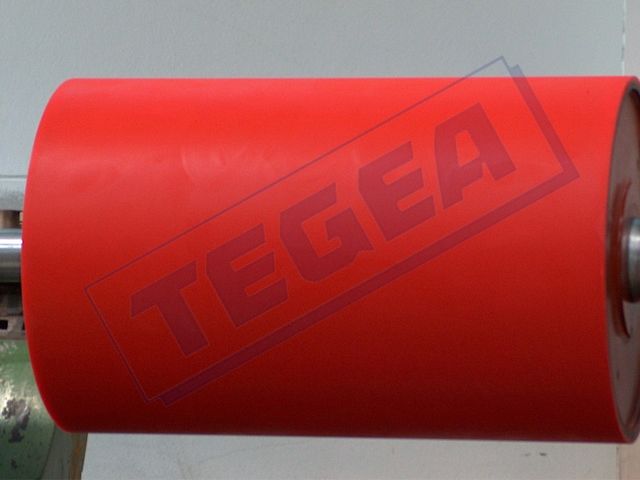
Ground rollers are an essential and strategic component in industrial handling and processing systems, areas where dimensional accuracy and surface quality are crucial to ensuring optimal results. The grinding process, a form of mechanical finishing, allows for surfaces with minimal roughness. This not only ensures extremely tight dimensional tolerances but also contributes to a high-quality surface finish, essential for the proper functioning of the equipment.
TEGEA offers a range of tailor-made solutions, including:
- Supply of complete rollers: rollers designed and manufactured to measure to meet specific customer needs, ensuring perfect adaptation to production processes.
- Coating Service: Application of specialized materials to existing rollers, aimed at improving their performance and extending their useful life.
- De-rubbing and re-rubberizing: removal of the old coating and application of a new one on worn rollers, with the aim of restoring optimal operating conditions and ensuring effective and long-lasting performance.
Thanks to these solutions, TEGEA positions itself as a reliable partner in the sector, ensuring that each component meets the highest standards of quality and functionality.
Advantages of Ground Rollers
- Improved Surface Roughness: Grinding is an essential process that produces extremely smooth surfaces, significantly reducing friction. This not only optimizes performance during machining but also improves the overall efficiency of production processes, ensuring more consistent, high-quality results.
- High Dimensional Accuracy: Grinding is essential for ensuring tight tolerances, which are absolutely essential for a wide range of applications requiring a high degree of accuracy and precision. This level of precision is crucial in industries where even a small error can jeopardize the entire production process.
- Reduced Wear: A smoother surface results in significantly reduced friction, which not only extends the roller's operating life but also helps reduce overall maintenance costs. A proactive approach to surface management is therefore beneficial from both a financial and operational standpoint.
- Versatility in Coating Materials: This process offers the ability to coat rollers with various materials, such as polyurethane, rubber, silicone, and others, allowing for perfect adaptation to specific application needs. This flexibility is essential for achieving optimal performance in various industrial settings, ensuring that the rollers meet the specific requirements of each application.
Application Sectors
Ground rollers are used in a wide range of industrial sectors, each with specific requirements and unique challenges. Among these, we can highlight:
- Paper Industry: These rollers are essential for transporting and processing paper. Their design ensures gentle handling, essential for avoiding damage to the delicate paper surfaces, and durability, allowing operation even in high humidity conditions, which can be typical in this sector.
- Textile Industry: In the textile processing industry, ground rollers are used in finishing and treatment processes. These rollers ensure a high level of precision and control during material handling, crucial elements for maintaining the final quality of textile products.
- Food Industry: Here, rollers are used to transport products on production lines. It's essential that these rollers meet the required high hygiene standards, as any contamination could compromise food safety, so preventing contamination is a key feature.
- Steel Industry: In this sector, rollers are used in applications that require not only high resistance to heavy loads but also the ability to operate at high temperatures. These characteristics are crucial for maintaining precision and reliability during metalworking processes.
- Material Handling: Ground rollers are ideal for use in conveyors and handling systems. In these contexts, high precision and durability are required, as efficient material movement is crucial to the operation of many production processes.
- Industrial Painting: Finally, paint rollers specifically designed for the sheet metal coil painting industry play an important role, ensuring uniform and controlled application of paint to the metal surface. This is essential for achieving a high-quality finish and protecting the underlying material from environmental conditions.
In the gallery below, you will find some examples of technical articles created.
You can also explore our full Gallery to view additional products and find inspiration for your application.
Name
Biconical rollers
Precision and reliability in pipe handling
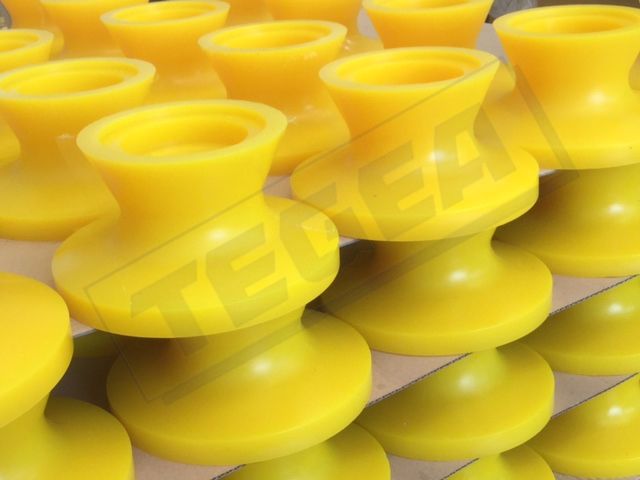
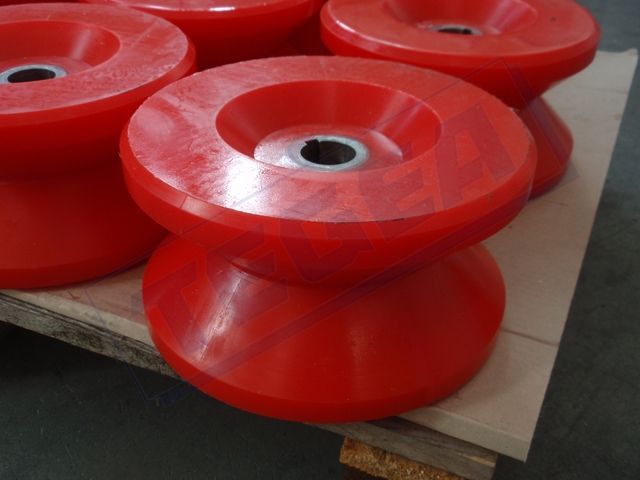
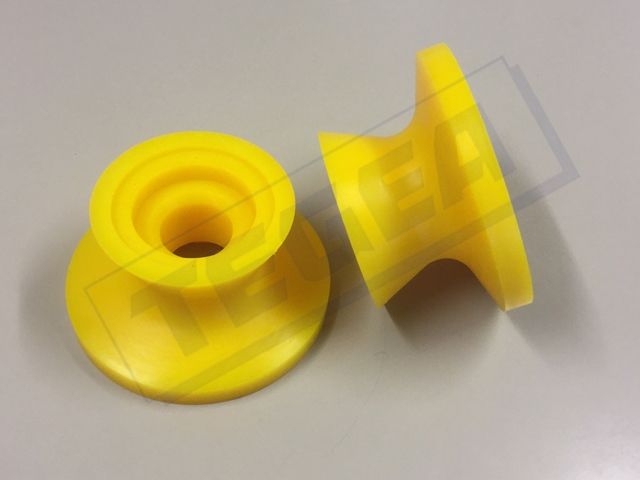
TEGEA double-conical rollers are designed to ensure smooth and controlled transport of pipes and cylindrical materials on conveyor lines and roller conveyors. Their conical shape allows for precise adaptation to the pipe diameter, optimizing contact and ensuring stable guidance during transport.
We offer complete rollers, and can recoat them on request or re-rubberize worn rollers by removing the old material and applying a new coating. Thanks to our experience, we assist customers in selecting the ideal material, hardness, and geometry, ensuring maximum operational efficiency for each application.
Main features
- Conical shape for stable guidance: improves contact with the tubes and ensures smooth transport.
- Wear and chemical resistance: surfaces designed for intensive work cycles in demanding industrial environments.
- Wide range of materials: polyurethane, rubber, silicone and plastic materials, customized according to the application.
- Customizable hardness: Available in hardnesses from 10 Shore A to 85 Shore D to optimize grip and durability.
- Customized solutions: possibility of supplying rollers with customized geometries and customer-specific characteristics.
Application sectors
TEGEA biconical rollers are used in various industrial sectors, each benefiting from their unique characteristics and functionality. In the steel industry, these rollers are used to transport and handle metal pipes, ensuring efficient and safe loading and unloading operations. In the petrochemical industry, they play a vital role in supporting the treatment and handling of pipelines and pipes, helping to maintain smooth and trouble-free workflows. TEGEA biconical rollers are also indispensable in the construction industry, as they are used in conveyor lines for PVC pipes, cement, and building materials, facilitating construction operations. Furthermore, they are used in other industrial sectors where precise and safe handling of cylindrical materials is required. Thanks to our proven experience, we are committed to supporting customers in choosing the biconical roller best suited to their specific needs, ensuring customized solutions for every industrial context.
Why choose TEGEA
Your one-stop partner for complete and customized mechanical solutions
A single partner for: application analysis, CAD/CAM design, machining, coating and grinding, testing, and technical documentation. This end-to-end approach ensures consistency from the first sampling to production, with clear timelines and dedicated technical support. We are the go-to supplier for rollers for handling, transport, and processing in Cuneo, with solutions tailored to the customer's operational priorities.
GENERAL QUESTIONS
& RISPOSTE
Have questions about our business? Find the answers below!
Which industries use heavy-duty rollers?
Industrial rollers are used in logistics, manufacturing, production plants, automated warehouses, and freight transport systems.
Can industrial rollers be customized?
Yes, rollers can be made to specific sizes, materials, and configurations based on the operational needs of the plant.
What is the difference between idle and motorized rollers?
Idler rollers exploit the thrust of the load or the line, while motorized rollers allow automated movement via transmission systems.
Are heavy duty rollers suitable for continuous use?
Systems designed for intensive industrial applications are built to withstand continuous work cycles and high loads.
Is it possible to integrate the rollers into existing systems?
Yes, handling rollers can be integrated into existing conveyors and production lines, subject to the plant's technical specifications.
Contact TEGEA for information on heavy-duty rollers.
Request a technical solution designed to meet the needs of your industrial plant.